Test your level of preparedness in 10 questions
ready?
Having an emergency evacuation bag is a great start. But the real preparedness goes beyond equipment. It’s about reflexes, knowing your surroundings and getting your family involved.
This quick questionnaire is designed to help you assess the gaps in your preparedness plan. It’s not a grade, but a compass to guide you towards greater serenity.
Your Evakit emergency bag :
A. Is always at hand, in a place easily accessible to the whole family.
B. Is stored in a cellar, attic or closet where I have to search.
C. Has not yet been built up.
Your family’s rallying point:
A. Is clearly defined and known to all family members, including children.
B. Has been thought about, but not yet clearly communicated.
C. Has never been discussed within the family.
How long would it take you to leave your home in an emergency?
A. Less than 2 minutes. I’ve already timed an evacuation drill.
B. Between 5 and 10 minutes. You’ll need to gather a few essentials first.
C. More than 15 minutes. I’d be in a panic and wouldn’t know where to start.
Family identification and important documents :
A. Are scanned and/or grouped in a bag or pouch in my emergency bag.
B. Are stored somewhere in the house, but I haven’t collected them.
C. Are scattered in various drawers.
Your communication plan :
A. I have an emergency contact outside the region and we have defined a code or specific messages to signal that everything is okay.
B. We would signal each other if we saw each other or called each other, but I don’t have a specific plan.
C. I never thought of the idea of a communication plan if the networks were saturated.
How do you prepare your loved ones (children, the elderly)?
A. We do regular exercises. I’ve explained to them why it’s important and they know what to do.
B. I’ve already discussed it with them, but without doing any practical exercises.
C. I don’t want to worry them by bringing this up.
Do you know your immediate neighbors and have you included them in your plan?
A. Yes. We have a mutual agreement to help each other in an emergency, and we have emergency contacts for our loved ones.
B. I know my neighbors, but we’ve never talked about emergency preparedness.
C. I don’t know them.
What else does your emergency kit contain?
A. Specific medicines (on prescription), personal items to reassure the children, important documents and cash.
B. A few bottles of water, energy bars, but nothing personal.
C. I haven’t added anything specific for my family.
Do you have a flashlight handy in every room?
A. Yes, with fresh batteries, as well as the flashlight included in my Evakit.
B. I have one somewhere, but I’m not sure of its location or the condition of the batteries.
C. No, I use my phone.
How often do you update the contents of your Evakit bag?
A. Every year I check the expiration dates and replace if necessary.
B. I updated it once, but haven’t touched it since.
C. I’ve never done it.
The moment of truth
Majority of A: Congratulations! You are an example of preparedness. You have not only the right equipment, but also the right frame of mind. Your family is ready to deal with an emergency calmly and efficiently.
B Majority: That’s an excellent start! You’re aware of the importance of preparedness. Your plan is there in theory, now it’s just a matter of putting it into practice. The training guides on our site are designed to help you take the next step.
Majority of C: Don’t worry, it’s never too late to start. The important thing is to take the first step, because preparedness is a priceless peace of mind. To get started, start with the basics: put together your Evakit bag and talk it over with those closest to you.
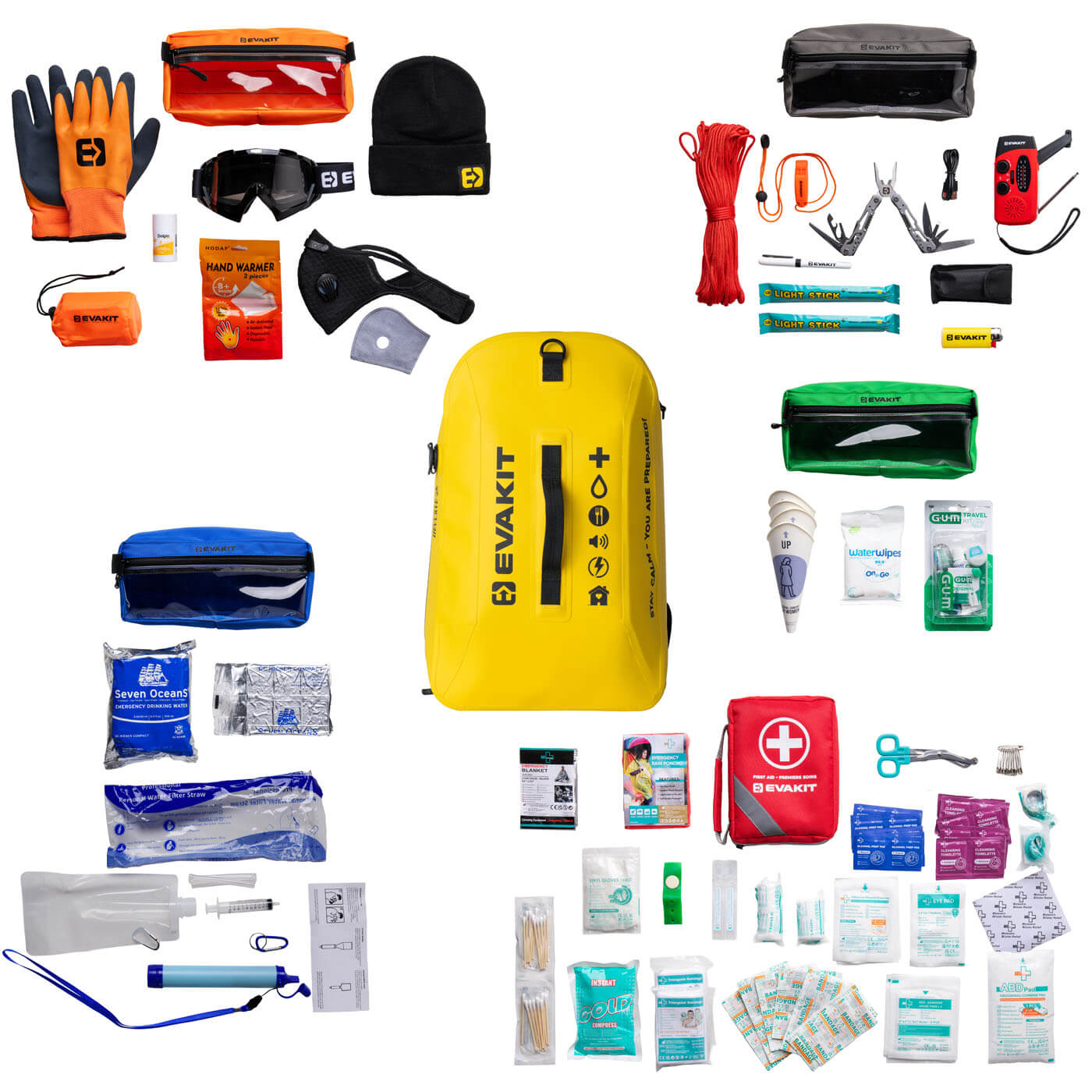
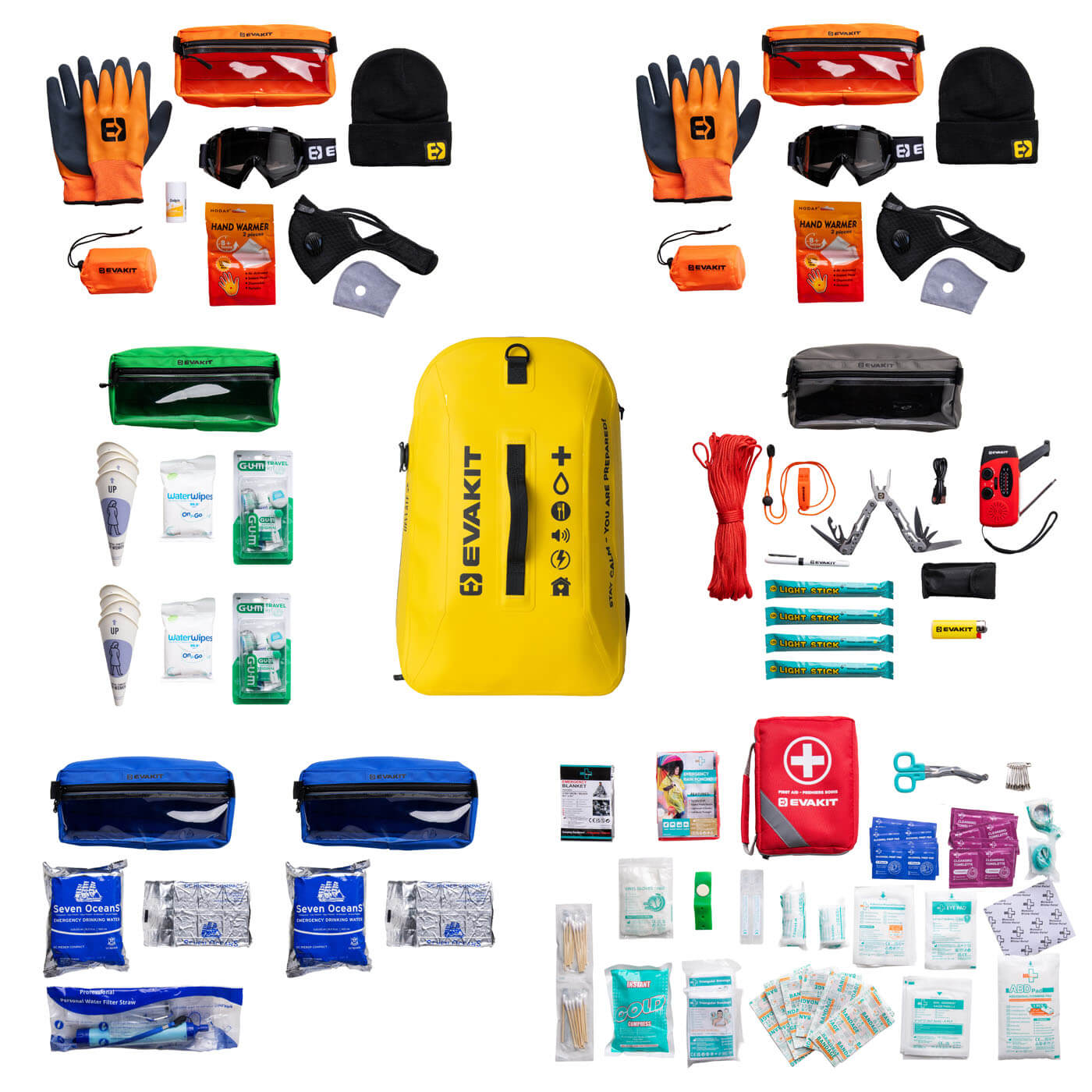
How about giving yourself the best possible start to your serenity? Discover Evakit, the all-in-one emergency bag. It provides you with a solid foundation on which to build your preparedness plan.
Each Evakit bag is delivered complete and can be completed with personal effects. Modules are also available separately.